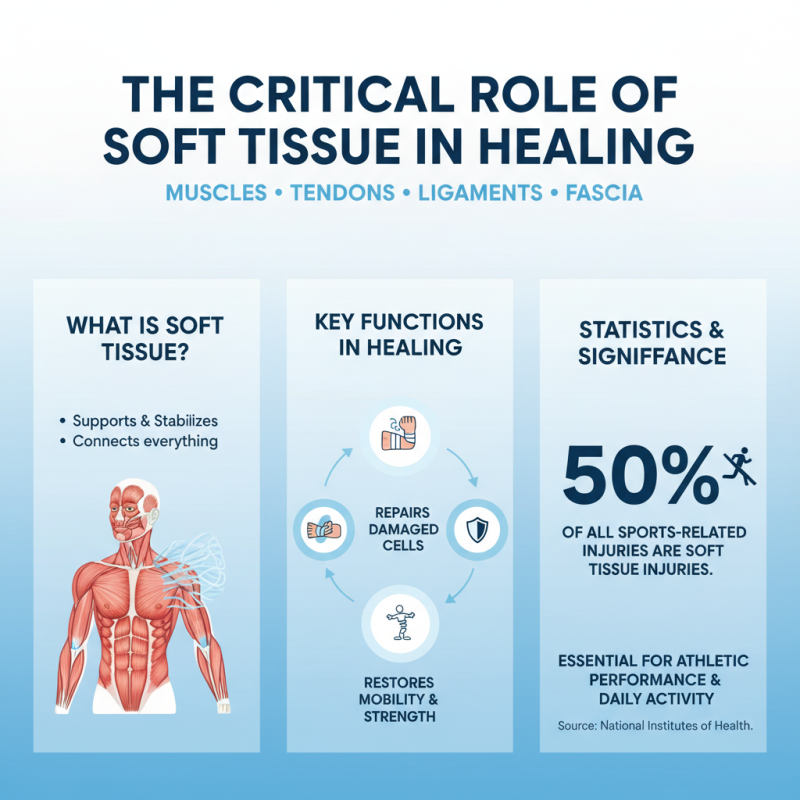
Soft tissue regeneration is crucial for healing and recovery. Dr. Emily Chang, a leading expert in regenerative medicine, states, "Without proper soft tissue regeneration, recovery is incomplete." This highlights the significance of soft tissues, such as muscles and ligaments, in the healing process.
Injuries often disrupt soft tissues, leading to pain and limited mobility. Effective regeneration restores not only function but also quality of life. Patients may struggle to regain full strength without adequate healing. The body’s ability to repair itself depends heavily on these processes. We must address how to enhance and support soft tissue regeneration.
Research shows that various factors can hinder healing. For instance, age and nutrition play vital roles in recovery. This complexity means that solutions are not always straightforward. Moreover, some regenerative therapies may not yield consistent results. Understanding soft tissue regeneration is an evolving journey. We must learn from both successes and setbacks to improve recovery outcomes.
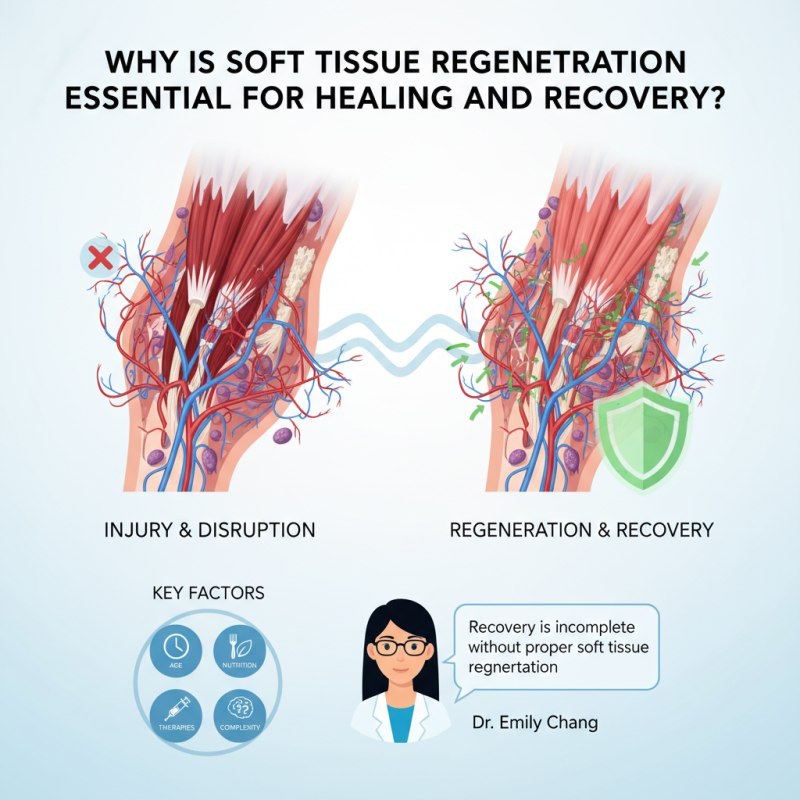
Soft tissue plays a critical role in the body’s healing process. It includes muscles, tendons, ligaments, and fascia, all of which support and stabilize our physical structure. According to a report by the National Institutes of Health, soft tissue injuries account for approximately 50% of all sports-related injuries. This statistic highlights the significance of soft tissue in both athletic performance and day-to-day activities.
During recovery, soft tissue works as a bridge for healing. It regenerates by forming new cells and repairing damaged areas. A study published in the Journal of Orthopedic Research found that timely intervention can reduce healing time by up to 40%. This reinforces that understanding soft tissue biology can enhance recovery protocols. However, the complexity of soft tissue healing means that outcomes can vary significantly from person to person.
In digital health, technologies for monitoring tissue health are emerging. Devices measure blood flow and tissue oxygenation, providing data to inform rehabilitation strategies. Despite these advances, many continue to encounter setbacks, suggesting that further research into personalized healing processes is essential. The challenge remains in translating this data into effective treatments that cater to individual healing patterns.
Soft tissues play a critical role in recovery and healing. They include muscles, tendons, ligaments, fascia, and nerves. Each type serves distinct functions during the healing process. For instance, tendons connect muscles to bones, facilitating movement. Ligaments provide stability to joints. According to the National Institutes of Health, injuries to soft tissues account for approximately 40% of all musculoskeletal injuries. Thus, understanding their roles is vital in recovery strategies.
An effective healing process requires adequate blood supply to these tissues. Oxygen and nutrients delivered by blood circulation promote cellular repair. Collagen synthesis is essential in soft tissue regeneration. A study published in the Journal of Orthopaedic Research suggests that enhanced collagen production can reduce recovery time by up to 30%. Without proper attention to vascular health, healing could be delayed, affecting overall recovery.
Additionally, the presence of inflammation indicates a healing response but can be a double-edged sword. While it signals the body to initiate repair, excessive inflammation may hinder progress. Balancing these factors is complex. Recovery protocols sometimes overlook individual variability. Not everyone responds the same way, highlighting the need for personalized approaches in soft tissue recovery.
Soft tissue regeneration plays a vital role after injury. It involves several intricate mechanisms that are crucial for healing and recovery. After an injury, the body initiates a series of biological processes. These include inflammation, tissue formation, and remodeling. The body needs to repair damaged cells and restore blood flow to the injured area. This is where the regeneration mechanisms take place.
During inflammation, cells release signaling molecules to attract immune cells. These immune cells help clean up debris and create a conducive environment for healing. Once the inflammation subsides, fibroblasts play their role. They produce collagen, which is essential for forming new tissue. This is a complex process that requires precision. However, it can sometimes go awry, leading to excessive scarring or insufficient tissue formation.
Tips: Staying hydrated can aid the healing process significantly. Also, consider incorporating protein-rich foods into your diet. They provide the necessary building blocks for tissue repair. Remember, the body requires time to heal properly. Rushing the recovery may hinder proper regeneration. Be patient with your body’s pace. Understanding these mechanisms can help in appreciating the body’s incredible ability to heal.
Soft tissue regeneration plays a crucial role in healing and recovery. Several factors influence this process. The body’s natural ability to regenerate tissues varies greatly among individuals. Age is a significant factor; older adults often experience slower healing rates due to reduced cellular function.
According to a report from the American Academy of Orthopaedic Surgeons, older adults may take up to 30% longer to heal after injuries compared to younger individuals.
Nutrition is another critical aspect impacting soft tissue regeneration. A well-balanced diet rich in vitamins C and E, protein, and omega-3 fatty acids can enhance tissue repair. Research indicates that adequate protein intake can improve muscle regeneration by 33%. Conversely, deficiencies in these nutrients can severely impair the healing process. Additionally, hydration plays a vital role. Even mild dehydration can lead to reduced circulation, affecting nutrient transport to damaged tissues.
Inflammation management is also important. Chronic inflammation can hinder regeneration and prolong recovery times. A study published in the Journal of Clinical Investigation highlighted that a balanced inflammatory response promotes effective healing. However, managing inflammation is complex and requires a tailored approach. Many individuals overlook the importance of lifestyle choices, which can lead to suboptimal healing outcomes.
Soft tissue healing plays a crucial role in recovery. Innovations in this field focus on improving patient outcomes. Recent techniques emphasize the importance of cellular and molecular processes. Researchers have found that tailored growth factors can enhance tissue regeneration. These advancements target specific types of tissues, making therapies more effective.
In clinical settings, practices like PRP (Platelet-Rich Plasma) therapy show promise. This method uses a patient’s own blood to promote healing. Additionally, advances in bioengineering lead to the development of scaffolds that support cell growth. These scaffolds provide the necessary framework for damaged tissue to rebuild.
However, challenges remain. Not all patients respond equally to treatments. The complexity of individual healing processes requires ongoing study. Finding the right combination of therapies is critical. Clinicians must evaluate and adapt approaches based on patient progress. This need for personalization creates room for continuous improvement and innovation in soft tissue healing.
We use cookies to show you content that is relevant to you. By clicking “Accept”, you agree to the storing of cookies on your device to enhance site navigation, analyze site usage, and assist in our marketing efforts. Feel free to read more about cookies by clicking "settings"